Who Gets to Be Heard? The Case For Researching Assisted Methods to Autistic Communication
08/05/2026
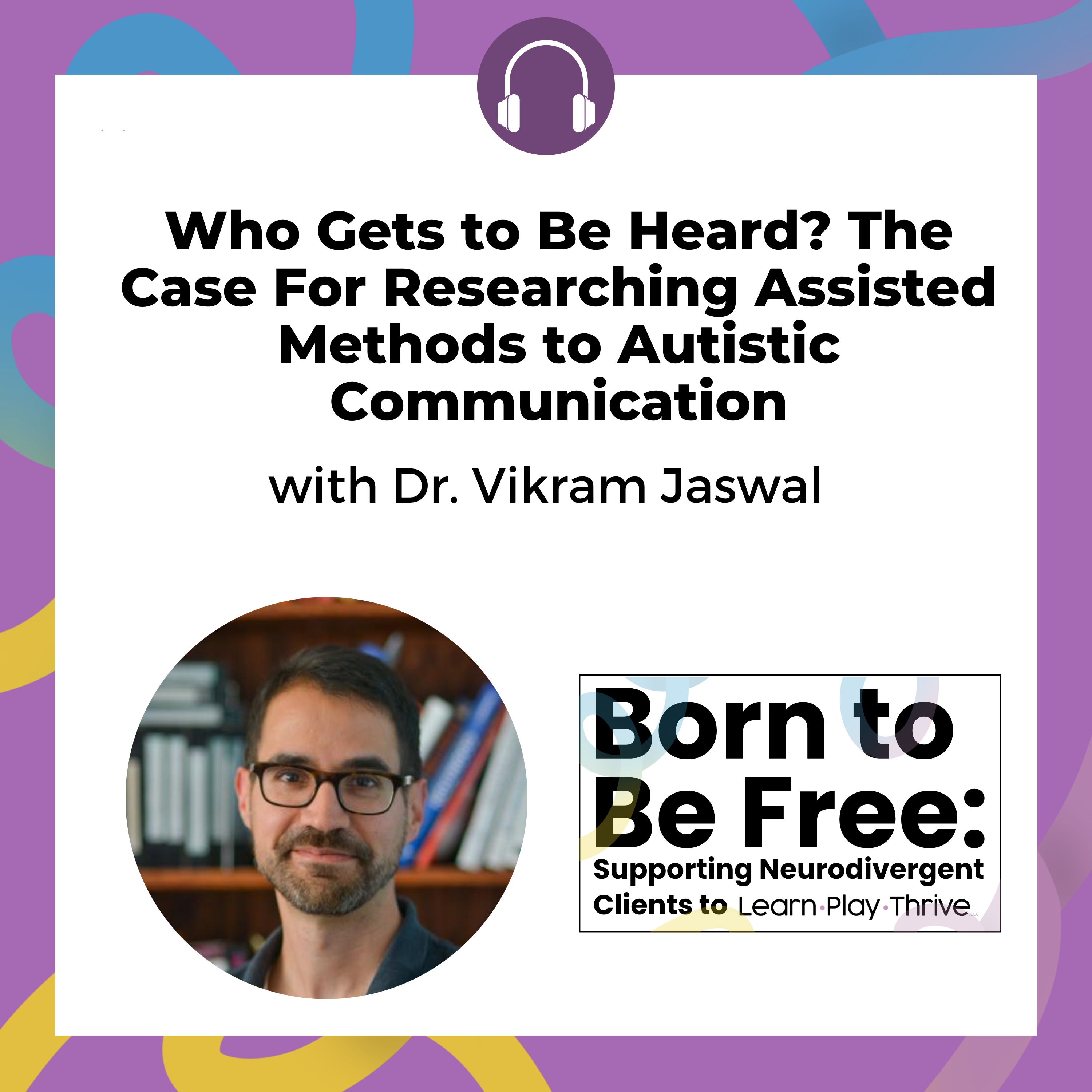
Here's what we know: assisted methods to teaching typing have been highly controversial in the field of speech-language pathology, and simultaneously have been passionately defended by many non-speaking Autistics. In a recent paper, researcher Vikram Jaswal, along with a team including Dr. Kristie Patten, Dr. Barry Prizant, and several others, argued that we need more research on assisted communication methods so that we can get clearer answers. On the podcast today, Dr. Jaswal and Italk about what all of this means, why it has been so controversial, and what steps might help us understand the potential - and the limitations - of assisted communication methods.



Show Notes
- Read Dr. Jaswal’s article, Why We Need to Study Assisted Methods to Teach Typing to Nonspeaking Autistic People
- Read letters to the editor critiquing the article, and Dr. Jaswal’s full responses: full text
- Dr. Jaswal’s Lab Website
- Open access research papers:
- Jaswal, V. K., Prizant, B. M., Barense, M. D., Patten, K., Stobbe, G. (in press). Why we need to study assisted methods to teach typing to nonspeaking autistic people. Autism Research. [open access full text]
- Jaswal, V. K., Krishnamurthy, D., & Wang, M. (June 2025). The quest to ensure nonspeaking autistic people are heard. IEEE Spectrum. [Read Article]
- Jaswal, V. K., Lampi, A. J., & Stockwell, K. M. (2024). Literacy in nonspeaking autistic people. Autism, 28(10), 2503-2514. [open access full text] [EurekAlert!] [FAQs]
- Jaswal, V. K., Wayne, A. & Golino, H. (2020). Eye-tracking reveals agency in assisted autistic communication. Scientific Reports, 10, 7882. [open access full text] [animated video abstract] [summary & FAQs] [TPGA interview]