
Strengths-Based Practices in Action: Supporting Your Autistic Clients to Learn, Play & Thrive
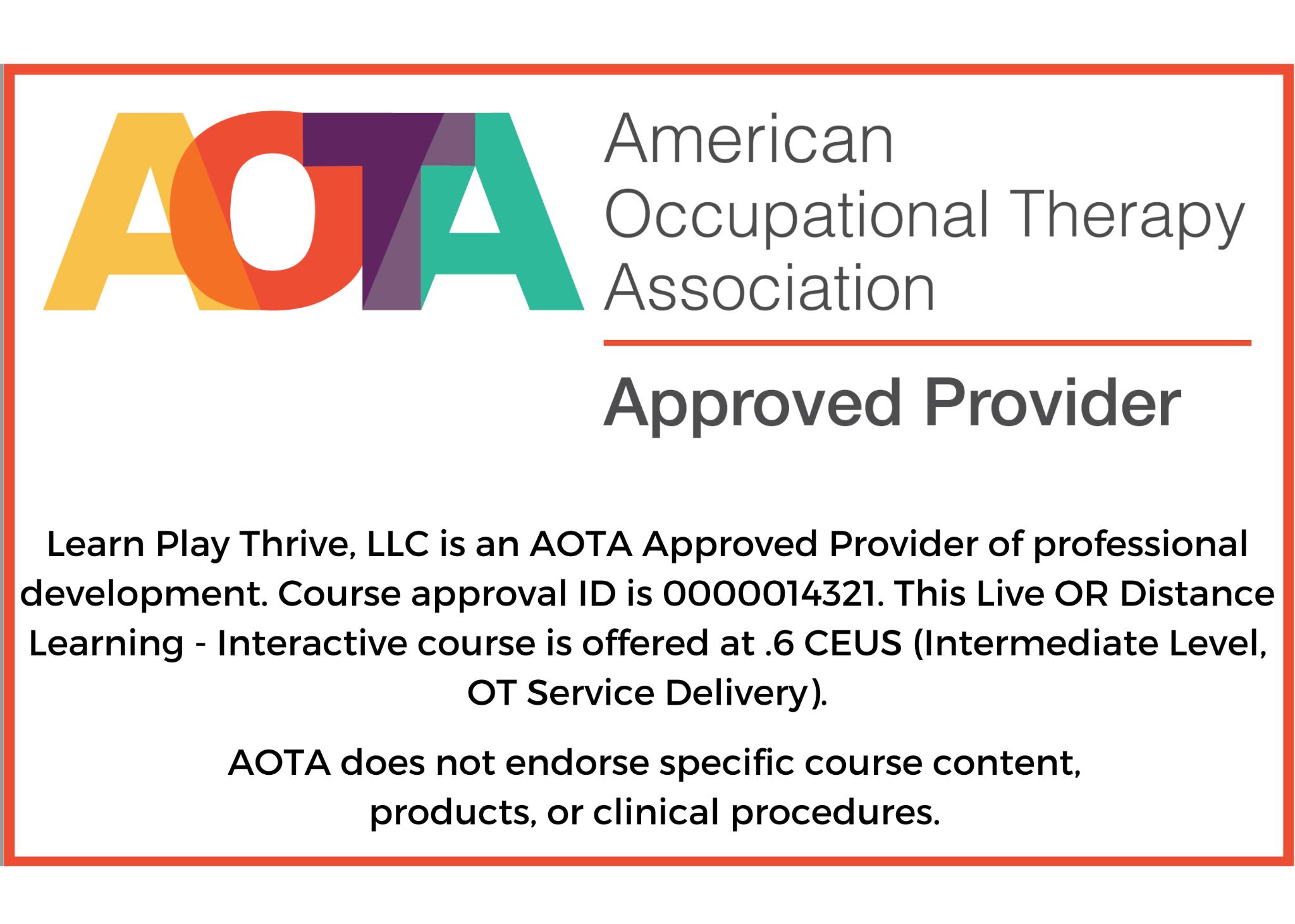
In this live, in-person 6-contact-hour course, your team will learn how to support the deepest well-being of their Autistic clients. This training is registered for .6 ASHA CEUs, .6 AOTA CEUs, and 6 NBCC hours.


What You'll Learn
Neurodiversity Language
There is so much conflicting information out there about what language we should use to describe our Autistic clients. In this short introductory module, you'll learn to center Autistic perspectives and well-being in language choices. Topics covered include neurodiversity, identity-first language, and high/low-functioning labels so that you can choose your words with confidence and defend your choices to others. You'll also get oriented to the goals, organization, and evidence base for the training.
Authentic Well-Being
This should be the starting point of every conversation about how we support our clients. Unfortunately, we often instead start with research evidence that doesn't center our clients' deepest sense of well-being, or with developmental milestones that don't reflect our Autistic clients' development. In this section, we'll dynamically examine both research and lived experiences to learn what it truly looks like to center authentic well-being for our Autistic clients. We will explore cultivating positive Autistic identity, supporting Autistic joy and passions, and Autistic play. We'll also go into how to move away from coercive practices that don't support authentic participation for your Autistic clients. While this portion is foundational for the training, it is also rich with examples and case studies of how to put affirming practices into action.
Responsive Practices
As providers, we will inevitably find ourselves supporting clients whose identities we don't share. Without becoming curious about our clients' intersecting identities, we cannot become the affirming provider our clients need and deserve. We'll learn about the experiences of Autistic people related to gender, sexuality, race, and more. Then, through group activities and personal reflection, we'll explore what it looks like to actively examine our biases, move through rupture and repair, and to create truly inclusive spaces. We'll also dive into how our work changes depending on what model of disability we choose.
The Autistic Neurotype
Many of us never get the chance to learn deeply about the Autistic neurotype beyond stereotypes and Autistic stress behavior. In this module, we'll deeply to explore how Autistic people learn and experience the world based on the latest research and the experience of Autistic adults so that you can create strengths-based support plans with confidence. Topics include Autistic social preferences, communication needs, the double empathy problem, routines, interests, auditory processing, executive functioning, and more. We'll explore the complexities of Autistic experiences including AuDHD (Autistic ADHDers), PDA (Pathological Demand Avoidance), 2E (twice exceptionality), non-speakers, motor disorders, and multiply-disabled Autistic experiences. Through reflecting on lived experiences and examining case studies, we'll explore practices that deeply support our Autistic clients.
Strengths-Based Treatment Planning
Learn a concrete process to help you shift your perspective and truly consider the experience of your Autistic clients. This means looking beyond the behavior you can see and diving deep into how a child's participation in daily routines is impacted by their neurotype, interests, and strengths, as well as the demands of the environment. You'll participate in a series of hands-on case studies as you learn an autism-specific process that will allow you to generate a robust list of hypotheses and strengths-based interventions every time you sit down with a new goal. This process is deeply transformative and designed to increase your confidence and skill at strengths-based treatment planning.
Self-Advocacy
Before our clients can advocate to have their needs met, they need to be able to feel what their needs are, and to experience having them accommodated so they can discover what is helpful to them. Only then can we begin to scaffold the process of teaching meaningful self-advocacy. In this module, we explore how we can meaningfully teach and support self-advocacy for Autistic people of any age.


This interactive training will
fill your toolbox with strengths-based ideas

Investment
$5,000 plus travel fees for a one-day in-person training for your group of any size.

Access
Disability accommodations available.

Continuing Education
This training is registered for ASHA, AOTA, and NBCC CEUs.

This course is
for you if...
- You currently work with Autistic clients in any setting and you want to be more effective in your strengths-based treatment planning
- You believe in learning from the lived experiences of Autistic adults with different intersectional identities
- You want concrete tools to help you shape your interventions based on the strengths of your neurodivergent clients so that they can experience more ease, authenticity, and joy in participating in their life
Testimonials
I have been a pediatric OT for almost 20 years, and Meg's course is the only one I've ever attended that I feel is absolutely spot on and the best approach to working with autistic clients. It gives me hope for our profession.
This has been the best course I have ever taken! It is worth every penny and your time. Meg offers so many practical real-life examples that you can put into practice right away. I walked away with so many tools and strategies to better serve my kids. Best of all, I feel as though I have a greater understanding of autistic learning styles.
Learn Play Thrive is the only course I would recommend for learning how to better evaluate and treat autistic children. I love that it values autistic perspectives and does not try to force autistic kids to present neurotypical, rather it helps support them in their own goals. I appreciate that it provides concrete examples and extra space to practice and discuss.
This is a career and practice changing course.
Wow! I honestly cannot say enough positive things about this training. Meg has put together a thoughtful, thorough, and highly informative training. I left feeling more confident in my understanding of how people with autism learn, think, and play, and with new concrete tools to use in my practice - a combination I feel is often lacking from trainings. I am excited to get back to work and implement all that I learned from this training as I am confident that it will help me feel better prepared and more capable when working with my clients!
This is by far the best course and professional development I have done to enhance my OT practice! Meg has taken a huge amount of research, knowledge and experience and condensed it into a course that is accessible, practical and just makes sense. I highly recommend this course to any OT working with young people with autism. You will not only walk away with explicit strategies and interventions but also a much deeper and useful understanding of autism learning styles and how this informs our practice.
If you're looking for effective, real-life strategies for working with children on the autism spectrum, you need to take this course. Meg uses her extensive experience to teach you not only what to do, but how to actually do it! Her presentation is engaging, easy to follow, and you'll walk away with the confidence that you can put these strategies into action right away.
I am an OT with over 30 years of experience working in the school setting. I have thoroughly enjoyed this very comprehensive course! In this course, Meg provides therapists with a comprehensive approach to meaningful and thoughtful assessment and intervention techniques. The information is shared in slides as well as in lively lectures. The format which incorporates " homework" really makes the information stick as you put it into practice. She provides thoughtful feedback and the Facebook group encourages further sharing amongst therapists. In all my years, I have never engaged in such a thoughtful and organized course where knowledge is gained and applied giving therapists a strong foundation in both theory and practice.
Learn Play Thrive should be a required part of every OT school pediatrics course. Meg does a wonderful job of explaining the paradigm shift to a strengths-based approach to autism and practices what she preaches by centering autistic voices in the course. LPT leaves you with both an important cultural mindset to guide your therapy practice AND concrete strategies to implement with clients.
The Learn Play Thrive Approach has shaped my career and my approaches with my clients. I was lucky enough to experience one of the first courses and refreshing with the updated course gives me so much hope for the future of Autistic people. I educate all my coworker about this course and everyone who has taken it shouts their praises.
This was a really great course - practical, well delivered, thoughtful and covers a broad range of areas relevant to OTs working with autistic kids and young people. I would absolutely recommend it for anyone who wants to add tangible new ideas to their therapeutic toolbox. I love that Meg has incorporated autistic voices within and sought out their feedback on the content of her course - Meg sets the bar high!
This is the most beneficial course I have taken in years. The information is presented clearly, and is research based. I found the assessment and intervention strategies to be practical and child/family oriented. I have also found that the intervention strategies really work! Meg is a wealth of knowledge, and a wonderful instructor. I am grateful to have had this opportunity.
This course is full of insights into providing a strengths based approach to autistic clients. It was fascinating to learn from Meg with a combination of presentations, handouts and video case studies. I've been an OT for 20 yrs and I'm so glad I found this course. The practical strategies offered are gold! This was such good value for money.
This is the most impactful CEU course I've taken to date. Typically a course will teach about autism in an outdated way; this course taught effective strategies and interventions to help take the perspective of autistic clients in a way that works. I have an entire new approach to working with autistics now and feel confident moving forward to educate others!
This course has been one of the most helpful and practical courses I have taken in....well forever. I have struggled ever since a student to accept the behavioral strategies taught to me and I could never carry them over with my clients. The forced compliance always felt wrong and unkind. This discomfort grew to an absolute rejection once I had my own children and eventually my own autistic children. I was never taught alternatives and therefor have spent years sort of "winging it" using strategies I learned from Floortime and Dr Ross Greene . This course has really pulled it all together for me and now I feel like I have a true framework to build from.
The LPT Approach to Autism is a course that all neurodiveristy affirming clinicians should take. I learned so much and it helped to really solidify some ideas I have about effective intervention with the autistic population. It was a great, easy to follow course.
As a new graduate occupational therapist working in a pediatric clinic setting, this class gave me very concrete, simple, methods that I could start implementing as soon as I watched them in the first module. I have taken a lot of CEUs that give me SO much information, but at the end I'm left confused on how to implement it. This course gave me all of the information AND all of the ways to implement it into my daily practice.
This has been a wonderful learning experience. The course is extremely well thought of and put together. Meg teaches in a way that is clear and concise. I highly recommend this course to anyone who wants to understand and engage their client in a respectful, empowering way.
This course is a great place to start if you want to be part of the shift to neurodiversity affirming practice! The ideas and processes covered in this course really helped me make a plan for changing the way I teach and guide my autistic students as an OTA. It gives a clear plan, has excellent opportunities to work through the plan in stages, great feedback, and a real-life scenario to use to work through the entire process to demonstrate understanding. It has lots of in-depth examples and case studies from which to glean insight. One of the best, most "walk out and use it" courses I've taken.
Course Objectives
- Evaluate current practices to identify areas of growth for culturally-responsive practices when supporting multiply marginalized Autistic people
- Critique traditional models of treatment planning using the framework of the Double Empathy Problem and research on the mental health outcomes of masking
- Develop six or more specific hypotheses about why a child may be having trouble with a routine or learning activity, centering the child's neurotype and authentic needs
- Generate six or more intervention strategies to teach new skills and adapt the learning environment based on specific client's strengths
- Select therapy practices that center authentic Autistic joy over compliance
Continuing Education Disclaimers
AOTA: The assignment of AOTA CEUs does not imply endorsement of specific course content, products, or clinical procedures by AOTA.
ASHA: This course will be available for ASHA CEUs from November 14, 2026 to November 14, 2031. ASHA CE Provider approval and use of the Brand Block does not imply endorsement of course content, specific products or clinical procedures.
NBCC: Learn Play Thrive, LLC has been approved by NBCC as an Approved Continuing Education Provider, ACEP No. 7586. Programs that do not qualify for NBCC credit are clearly identified. Learn Play Thrive, LLC is solely responsible for all aspects of the programs.
FAQ
What types of professionals is this course appropriate for?
What ages does this course apply to?
What is the teaching methodology?
Can I use this course for continuing education credit?
How do learners get a certificate of completion?
What is the cancelation policy?
If the training is canceled by Client more than 14 days before the scheduled live Program, Client will receive a refund of amounts paid, less a cancellation fee of $100 or 3.25% of the amount paid, whichever is greater. If Instructor has already incurred non-refundable or non-creditable travel or other expenses in connection with the Program, those expenses will also be deducted from the refund. If the Program is canceled by Client fewer than 14 days before the scheduled live Program, no refund will be issued. At Instructor’s discretion, Client may instead be offered the option to enroll learners in a comparable virtual training. No refunds or fee adjustments will be made based solely on changes in the number of learners attending the training.
Cancellation or Inability to Perform by Instructor
If Instructor cancels the training for reasons within Instructor’s control, Client will be offered the choice of a full refund or the opportunity to reschedule the training for a mutually agreeable date. If Instructor is unable to provide the training due to illness, injury, emergency, travel disruption, flight cancellation or delay, severe weather, government action, natural disaster, or another circumstance beyond Instructor’s reasonable control, Instructor will notify Client as soon as reasonably practicable. Instructor and Client will work in good faith to reschedule the training or, if rescheduling is not reasonably possible, Instructor will issue a full refund of amounts paid for the training. Instructor will not be responsible for Client’s additional costs, including conference expenses, travel expenses, accommodations, lost revenue, or other consequential or incidental costs, arising from Instructor’s inability to provide the training due to circumstances beyond Instructor’s reasonable control. If Instructor has incurred non-refundable travel expenses in connection with a training that cannot take place due to circumstances beyond Instructor’s reasonable control, such expenses will not be reimbursed by Instructor unless otherwise agreed in writing by the parties.